

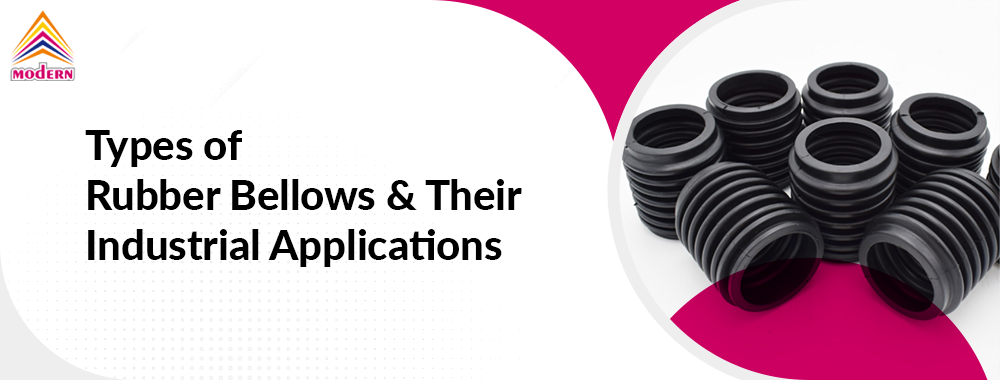
A reliable rubber bellows manufacturer knows that a rubber bellows is more than just a simple part. A rubber bellows protects moving parts from dust, dirt, and fluid and is found in much more than one would think. This guide details the uses of rubber bellows in various automotive, industrial and defence applications, as well as the different materials suitable for specific applications. Finally, we will discuss custom vs standard bellows so that when you approach a rubber bellows manufacturer for your project you will know what to expect.
What Rubber Bellows Are and Their Core Function
A rubber bellows is a flexible, folded cover which protects a moving part, typically a shaft, joint or cable, from dust, water and other contaminants. Its accordion construction allows it to stretch, compress and bend over and over without tearing, and can be used anywhere two components move against one another. In addition to acting as a dust barrier, bellows are capable of sealing in grease (or fluid) and the component below the bellows has a longer working life and requires less maintenance.
Materials Used and Why They Matter
The effect of material changes on the performance of a bellows in the field. EPDM is very resistant to the weather and is used in many exterior automotive components and industrial applications. Silicone is used when extreme heat or cold is expected because it will retain its shape and flexibility over a large temperature range. Neoprene has good oil- and fuel-resistance and reasonable flexibility properties, making it suitable for use in engine bays. The material selection is often a factor that manifests itself in the field in the form of cracking, hardening or early failure, and should therefore be done carefully from a design perspective rather than having to rectify it once parts have failed in the field.
Applications in Automotive
In vehicles, industrial rubber bellows for automotive applications most commonly appear as CV joint boots and steering gear covers. A CV joint boot keeps grease inside the joint while keeping water and grit out, and if it splits, the joint underneath can wear out quickly and expensively. Steering bellows do a similar job for the steering rack, shielding it from road debris and moisture picked up during normal driving.
Applications in Industrial and Power Settings
Outside vehicles, bellows are used in machinery to cover pistons, actuators, and cables that move repeatedly. In power plants and pumping stations in the power sector, bellows protect exposed mechanical linkages from dust and moisture, which matters a great deal in outdoor or high vibration environments where even a small failure can lead to a costly shutdown or an unplanned maintenance visit.
Applications in Defence
Defence equipment often uses bellows on vehicles, weapon systems, and field equipment where reliability cannot be compromised. These bellows are usually built to stricter specifications, since failure in the field is not an option, and the testing standards applied are typically higher than what is used for commercial grade parts.
Custom vs. Standard Bellows How to Choose a Manufacturer
Standard bellows work fine when your application matches common shaft sizes and movement ranges. Custom bellows are needed when the fold pattern, diameter, or material must match a specific machine or vehicle design exactly. When choosing a manufacturer, ask whether they can produce a matching mould for custom shapes, what materials they keep in stock, and what flexing and temperature tests they run before shipping. A manufacturer that can explain their process clearly, rather than giving vague answers, is usually one worth trusting with your order. For a broader look at vetting suppliers, see our related guide on how to choose the right rubber component manufacturer in India.
Quality Checks Worth Asking About
Before you finalize a supplier, it is worth asking how they test bellows before dispatch and reviewing their quality control process. Flex cycle testing checks how many times a bellows can fold and stretch before it starts to crack, which matters most for parts that see constant motion, such as CV joint boots. Temperature testing confirms the material stays flexible in cold weather and does not soften too much in heat, which is important for vehicles and outdoor machinery. Some manufacturers also run a basic leak or pressure check on bellows used to seal in grease or fluid, since a cover that looks fine visually can still fail its main job. Asking these questions upfront is a simple way to avoid receiving parts that look correct but do not hold up once installed.
FAQs
It depends heavily on the material and the environment, but a well matched bellows in the right material can last several years under normal industrial or automotive conditions.
Yes, most rubber bellows for automotive manufacturers and industrial manufacturers can produce custom sizes, though a new mould may be needed for shapes outside standard catalogue sizes.
The most common causes are using the wrong material for the environment, exposure to chemicals the material cannot handle, or physical damage during installation.
Many defence projects require parts to meet specific military or industry standards, so it is worth confirming testing and certification requirements before placing an order.
EPDM is usually the better choice for general outdoor exposure since it resists ozone and weathering well, while silicone is better reserved for cases involving extreme heat or cold.
Related Reading

Looking for a rubber bellows manufacturer for your next project?
Send your size, movement range, material, or operating environment details for a practical recommendation.