

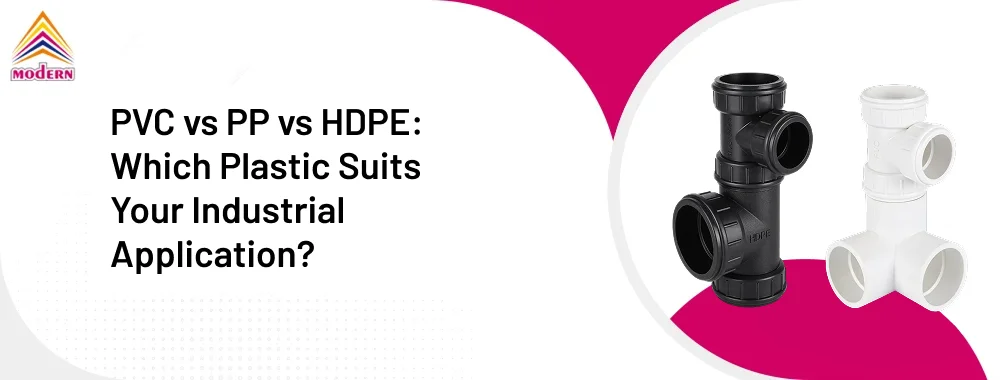
Selecting the ideal plastic substance for your components is not always easy. PVC, PP and HDPE might appear to be the same on paper, but they actually act very differently when they are in use. Choose the wrong part, and it may crack when hot or react to a chemical it wasn't designed to meet, or just wear out too quickly.
Of all the plastic materials that are used today, these three are certainly the most common types of industrial plastics in India. These plastics are not only cheap but versatile as well and have a very wide application. The main problem that one faces is how to determine which plastic material would suit his application. This guide simplifies the process for you.
Why Material Choice Matters for Industrial Components
Choices of PVC, PP and HDPE are typically dependent on three factors: chemical environment the part will be exposed to, operating temperature range, and mechanical loads that the part must withstand. Both of the materials can manage water well, while the third one can manage the water well in the future. The difference lies in their behavior at increased temperatures, solvents and prolonged impact stresses and this mismatch is the biggest reason for the failures of plastic components in industry.
Comparison Between PVC vs PP vs HDPE
The PVC vs PP vs HDPE material comes with different properties used and limitation and before choosing between them it’s important to know about them. The information related to all the things is listed below.
PVC – Properties, Common Uses, and Limitations
PVC (polyvinyl chloride) is a low-cost engineering plastic with good resistance to corrosion and wet and chemical environments, and is rigid. It is also used to make pipes, pipe fittings, cable jackets, windows and covers as it is easy to fabricate and durable. Low thermal resistance, and may be brittle when exposed to high doses of UV for extended periods if not treated. In cases where chemical resistance and affordability is essential, PVC Manufacturers India have a wide range of choices.
PP (Polypropylene) – Properties, Common Uses, and Limitations
Polypropylene is a lightweight, chemically resistant thermoplastic with general structural characteristics comparable to HDPE. It is not flexible, but most of its defining characteristic is that it becomes resistant to fatigue in thin sections, which is what makes it capable of being used as a living hinge. PP is not a soft and impact-resistant material for structural parts. Unless impact modified, PP is brittle below around 0°C and is not suitable for cold-chain, refrigeration or outdoor winter services. If using at low temperatures, the grade of HDPE or impact modified PP should be used. Some of the best polypropylene suppliers in India offer several types of polypropylene to suit diverse industrial and engineering purposes.
HDPE – Properties, Common Uses, and Limitations
HDPE or High Density Polyethylene is a strong engineering plastic that has great impact strength, high moisture resistance, and good chemical resistance. HDPE is frequently used in manufacturing of tanks, containers, pipes, garden furniture, material handling equipment because it is able to withstand challenging conditions. While being less rigid and a little bit more costly than PVC and PP, HDPE has great durability. There are many HDPE manufacturers India who produce industrial-grade plastics.
Side-by-Side Comparison of PVC vs PP vs HDPE
| Factor | PVC | PP | HDPE |
|---|---|---|---|
| Cost | Low | Low-Moderate | Moderate |
| Temperature Resistance | Low-Moderate | Moderate | Moderate |
| Chemical Resistance | Good | Very Good | Very Good |
| Impact Strength | Moderate | Moderate | High |
| Typical Applications | Pipes, fittings, cables | Containers, hinges, auto parts | Tanks, heavy-duty piping |
How to Choose between PVC vs PP vs HDPE
To choose between these materials and for which industries is made that information is given below.
PVC (Polyvinyl Chloride)
PVC is the ideal plastic for applications where hard, low cost and corrosion resistance is required. It is employed for different industrial parts such as water pipes, pipe fittings, cable insulation, etc.
PP (Polypropylene)
PP is the best choice for applications where resistance to chemicals and flexibility are the main requirements. PP is used in chemical tanks, packaging materials, auto parts, and other parts that bend many times.
HDPE (High-Density Polyethylene)
HDPE is the most suitable material when toughness and resistance to shock loading are necessary. HDPE is used in industrial storage tanks, industrial piping, outdoor products, and material handling products.
Need Help Choosing the Right Plastic?
If you're unsure which material best suits your application, consult an experienced plastic products manufacturer. The right recommendation can help you select a material that delivers the required performance, durability, and cost efficiency.
FAQs
PVC is generally the most affordable of the three, followed by PP. HDPE tends to cost a bit more due to its strength and durability.
All three can be used outdoors, but HDPE handles UV exposure and rough weather better. PVC needs UV stabilizers to avoid becoming brittle over time.
PP and HDPE both offer strong chemical resistance, making them common choices for chemical containers and tanks.
Yes, HDPE generally has better impact resistance and durability under stress compared to PVC, though PVC is more rigid.
Yes, most manufacturers offer custom sizes, thicknesses, and grades depending on your project's specific requirements.
All three are widely manufactured in India, so bulk sourcing usually isn't a problem. Lead times can still vary by manufacturer, so it's worth checking stock availability before finalizing an order.